Navigating CPC and CE Certifications for Global Playground Deployments
A practical guide to meeting US and EU safety standards for inflatables, soft play, and indoor playground equipment.
The Critical Role of Certification in Global Expansion
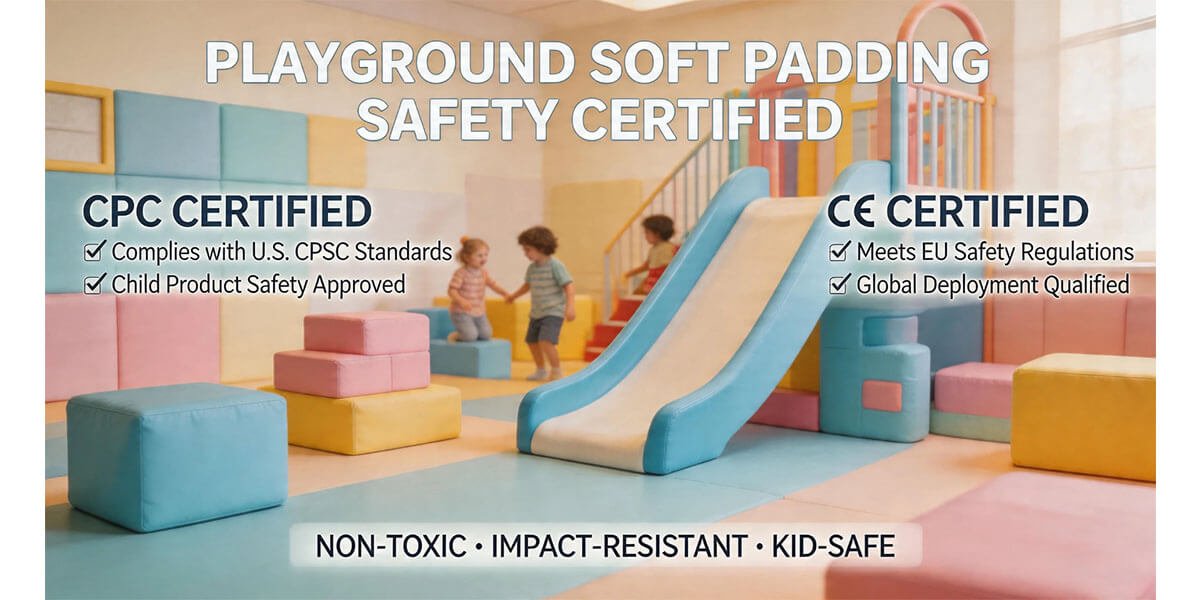
When executing global playground deployments, navigating international safety standards is as crucial as the design itself. Certifications matter because they are the gateway to market entry, ensuring your investment is legally protected and operationally viable.
Deploying non-compliant equipment carries severe risks. Buyers face potential customs seizures, liability lawsuits, and immediate rejection by commercial insurance providers. Furthermore, regulatory bodies in both the US and EU markets are strictly enforcing these requirements.
Compliance is not optional—it directly affects your ability to operate and scale your business.
What is CPC Certification?
(USA Market)
CPC stands for Children’s Product Certificate. It is a strict legal requirement for products sold or imported into the United States, based on rigorous CPSIA regulations.
Key Requirements:
- Third-party lab testing (CPSC-approved labs)
- Material safety (strict limits on lead, phthalates)
- Flammability standards (where applicable)
Applies strictly to:
- Soft play equipment
- Inflatable bounce houses
- Indoor playground components
What is CE Certification?
(EU & UK Markets)
CE stands for Conformité Européenne. It is mandatory for commercial play products sold within the European Union and recognized in the UK market.
Relevant Standards:
- EN14960: Inflatable play equipment
- EN1176: Commercial playground equipment
Core Requirements:
- Structural safety and integrity
- Stability & secure anchoring systems
- Material strength and tear resistance
- User safety design (preventing entrapment)
CPC vs CE: Key Differences at a Glance
| Aspect | CPC (USA) | CE (EU) |
|---|---|---|
| Target Market | United States | Europe / UK |
| Primary Focus | Material safety (Chemicals) | Structural & mechanical safety |
| Testing Protocol | Mandatory third-party lab | Depends on product classification |
| Required Documents | CPC certificate + Test Report | CE declaration of conformity |
Expert Insight: Many global buyers and ambitious party rental companies require both certifications to ensure maximum indoor playground safety standards and flexibility for international deployment.
Why Certifications Protect Your Business
- Pass stringent customs clearance smoothly
- Meet commercial insurance underwriting requirements
- Avoid devastating legal liability in case of injury
- Build undeniable customer trust and brand reputation
💰 Certified equipment increases resale value and long-term profitability.
Common Mistakes Buyers Make
- Buying without verifying certification authenticity
- Accepting fake, altered, or expired certificates
- Ignoring specific local municipal regulations
- Choosing low-cost suppliers who cut corners on compliance
Warning: Non-compliant equipment can lead to immediate business shutdown or severe legal penalties.
How to Verify a Supplier’s Certifications
Don't take a supplier's word for it. Follow this strict checklist before making a purchase:
How Aurora Soft Play Ensures Compliance
At Aurora Soft Play, we ensure all products meet international safety standards. We take the guesswork out of importing by:
- Working strictly with certified testing labs
- Providing CE (EN14960 / EN1176) compliant designs
- Supporting full CPC documentation for US buyers
- Offering commercial-grade materials & rigorous QC
Trusted by clients in USA, UK, and Australia
Actionable Deployment Tips for Global Buyers
Research Locals
Understand your specific local municipal regulations before purchasing.
Verify Export Exp.
Choose suppliers with proven export experience to your specific region.
Plan Early
Plan certification requests early in the project timeline to avoid delays.
Align Design
Ensure custom designs align strictly with CE certification inflatable standards.